

African Studies Graduate School
Annex III, 4th & College Streets, NW Washington, DC 20059
Phone Number
(202) 238-2327
Email Address
AFST 309: Adv Sem in Lang Lit and Arts
Annex III, 4th & College Streets, NW Washington, DC 20059
(202) 238-2327
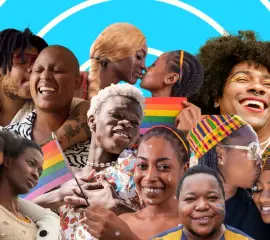
Queer life in Africa is shaped by an interplay of social forces that affect safety, belonging, and visibility in everyday settings. Family dynamics, religious teachings, community attitudes, and differences between urban and rural environments all play a significant role in determining the risks LGBTQ+ individuals encounter. These same forces also shape the strategies of resilience, solidarity, and creative adaptation that queer Africans develop in response to the challenges they face.

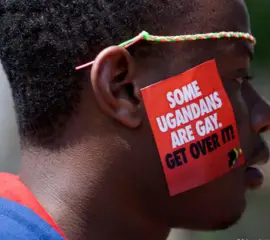
Living openly as a queer person in Africa often requires navigating significant social risks. Attitudes toward sexual and gender diversity vary across the continent, but stigma remains a persistent part of many people’s daily lives. Queer individuals regularly face discrimination and violence in homes, schools, workplaces, and health care settings. The decision to come out or even to be perceived as queer carries deeply personal and sometimes life-threatening consequences. Thus, queer African life is shaped by both personal beliefs or interpersonal interactions, and social and structural forces (Epprecht 2013; Lewis et al. 2023).
Family networks often serve as both sources of support and sites of intense pressure, with queer people negotiating dynamics around acceptance, secrecy, and survival. Religious institutions, common across both majority-Christian and majority-Muslim societies, significantly influence public morality and social norms. Sermons and teachings frequently frame queer identities as deviant, amplifying social stigma. Meanwhile, community attitudes, grounded in history, culture, and tradition, can reinforce stigma but also provide more subtle forms of solidarity and resilience.
On a structural level, access to resources such as healthcare, safe housing, legal protections, and social services significantly affects queer Africans’ well-being. The divide between urban and rural settings plays a major role, as urban centers often provide more anonymity, community networks, and supportive institutions than rural areas where surveillance and traditionalism predominate (Lewis et al. 2023).
Although laws and policies establish the formal framework within which these social dynamics operate, it is essential to recognize that lived experiences go far beyond legal status. The gap between formal protections or criminalizations and everyday realities is often substantial. Navigating this realm requires strategies of resistance, adaptation, and community-building to create spaces for survival and belonging.
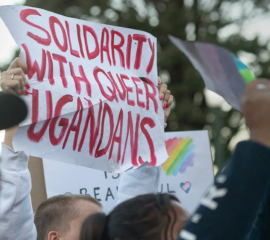
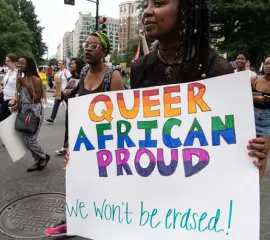
Despite these challenging conditions, queer Africans have developed powerful forms of resilience. Community-led organizations, informal support networks, and digital platforms have become crucial sources of affirmation and safety where formal institutions fall short. Young queer people, particularly in urban areas, cultivate solidarity through storytelling, mutual aid, and collective organizing, even in environments where risks remain high (Msibi 2013; Mugo 2021).