The history of queerness in Africa reflects a series of shifting eras, each exposing the ways in which queerness has been experienced, conceptualized, and inscribed within colonial, global, and local contexts. Historical evidence points to indigenous practices that acknowledged gender and sexual diversity in a variety of African societies.
African Gender Systems
Precolonial Era
Before European colonization, African societies demonstrated considerable diversity in their understandings of gender and sexuality (Murray and Roscoe 1998). Contrary to the narrative of a homogeneously heteronormative past, many regions displayed varied approaches. In southern Africa, for instance, the Lovedu and over forty other societies practiced “woman-marriage,” an institution where a woman could take wives and form a legitimate lineage, establishing roles and kinship structures outside binary models (Krige 1974; Herskovits 1938). In West Africa, the Hausa people acknowledged the presence of the ‘yan daudu’, men who adopted feminine roles and were integrated into both spiritual and social aspects of everyday life (Gaudio 1997). Across the continent, indigenous languages and oral traditions conveyed understandings of gender variance and same-sex relationships (Limakatso 1998; Morgan and Wieringa 2005; Gaudio 2009).
Colonial Era
The colonial period, however, abruptly and violently altered these dynamics. European powers imposed legal codes that criminalized acts deemed “unnatural,” with British, French, and Portuguese colonial officers enforcing strict anti-sodomy statutes and equating queerness with depravity (Epprecht 2008; Cameron and Mendes 1993). Simultaneously, “Victorian” Christian missionaries demonized indigenous sexual and gender variation. They actively attempted to eradicate local traditions in favor of binary, heteronormative models (Hoad 2007). These legal and religious systems did more than criminalize specific practices; they redefined non-normative sexualities and genders as alien to Africa itself. In the process, historical memories were systematically erased and recoded through the lens of colonial morality (Murray and Roscoe 1998).
Postcolonial Era
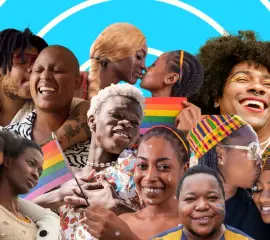
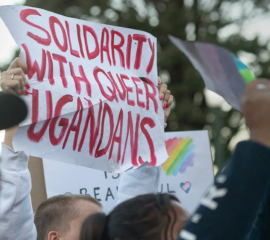
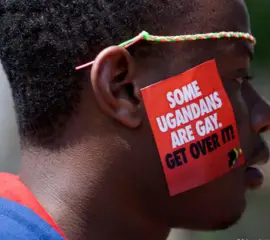
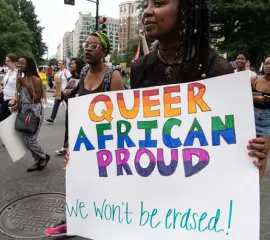
Following independence, many African nations retained these colonial-era anti-queer laws, often repurposing them for new political projects. In a twist of historical irony, political leaders have at times framed queerness as a foreign threat, linking it to “Westernization” and invoking selective ideas of “African tradition” in order to rally support or shift blame during moments of crisis. This nationalist rhetoric has provided a convenient tool for consolidating political power or deflecting attention from social and economic challenges. As a result, the social stigma surrounding non-normative sexualities has deepened, and public expressions of queer identity have remained fraught with risk. Despite these hostile conditions, queer Africans have continued to resist: preserving memory through oral traditions and community networks, reclaiming history in literature and art, and fighting for human rights on local and international levels (Migraine-George 2013; Oxford TORCH 2021). The postcolonial period has thus been marked by tremendous violence, but also by ongoing activism. This is testament to the enduring pursuit of belonging, recognition, and change.
Through these intertwined eras, the meaning and presence of queerness in Africa have continually shifted, shaped by local traditions, colonialism, and postcolonial politics. Today, the push for queer rights goes beyond the struggle for visibility; it is connected to ongoing efforts to reclaim and expand Africa’s own histories and cultural narratives. In this way, the present movement for LGBTQ+ rights operates as both resistance and restoration, reaffirming that queer Africans are part of Africa’s past, present, and future.