

African Studies Graduate School
Annex III, 4th & College Streets, NW Washington, DC 20059
Phone Number
(202) 238-2327
Email Address
AFST 309: Adv Sem in Lang Lit and Arts
Annex III, 4th & College Streets, NW Washington, DC 20059
(202) 238-2327
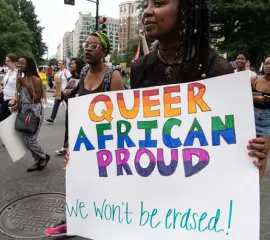
Queer life in Africa today is significantly shaped by global dynamics, including diaspora movement, international support networks, and the circulation of global media.

Migration and exile are common experiences: for many queer Africans, seeking asylum becomes essential for survival. However, this journey often brings new forms of marginalization in host countries where asylum systems are restrictive or ill-equipped to understand African queer realities (Lewis 2013; Murray 2014). Within the diaspora, queer Africans forge new identities, establish support networks, and navigate feelings of loss and belonging, themes explored in works such as Queer Africa: New and Collected Fiction.
Transnational networks and international NGOs occupy a complicated place in this sphere. Global funding and advocacy have offered visibility and critical resources to queer movements across the continent. Nevertheless, their involvement has raised important debates about external influence, representation, and ensuring that local activists define the goals of queer liberation (Mwangi 2022; Cambridge). Scholars such as S. N. Nyeck (2019) caution that external actors can unintentionally heighten risk for activists on the ground or frame African queer struggles through narratives that do not reflect local experiences. As Nyeck argues, African queerness cannot be reduced to standardized outcomes or externally driven agendas.
Global media further shapes these dynamics. Films, Twitter threads, Afrobeats music videos, and TikTok creators have amplified African queer stories, challenged stereotypes, and linked communities across borders. As anticipated, this visibility also carries risks: increased surveillance, online harassment, and misrepresentation by foreign outlets seeking sensational narratives. While public visibility can be empowering, it can also create new vulnerabilities, requiring careful decisions about when and how to be seen (Stobie 2014).
In this moment, African queerness is shaped through both local contexts and global connections. Movement across borders, international solidarity, and the sharing of queer African stories have broadened the ways individuals build community and imagine new futures, even as they continue to navigate persistent marginalization within Africa and in the diaspora.